
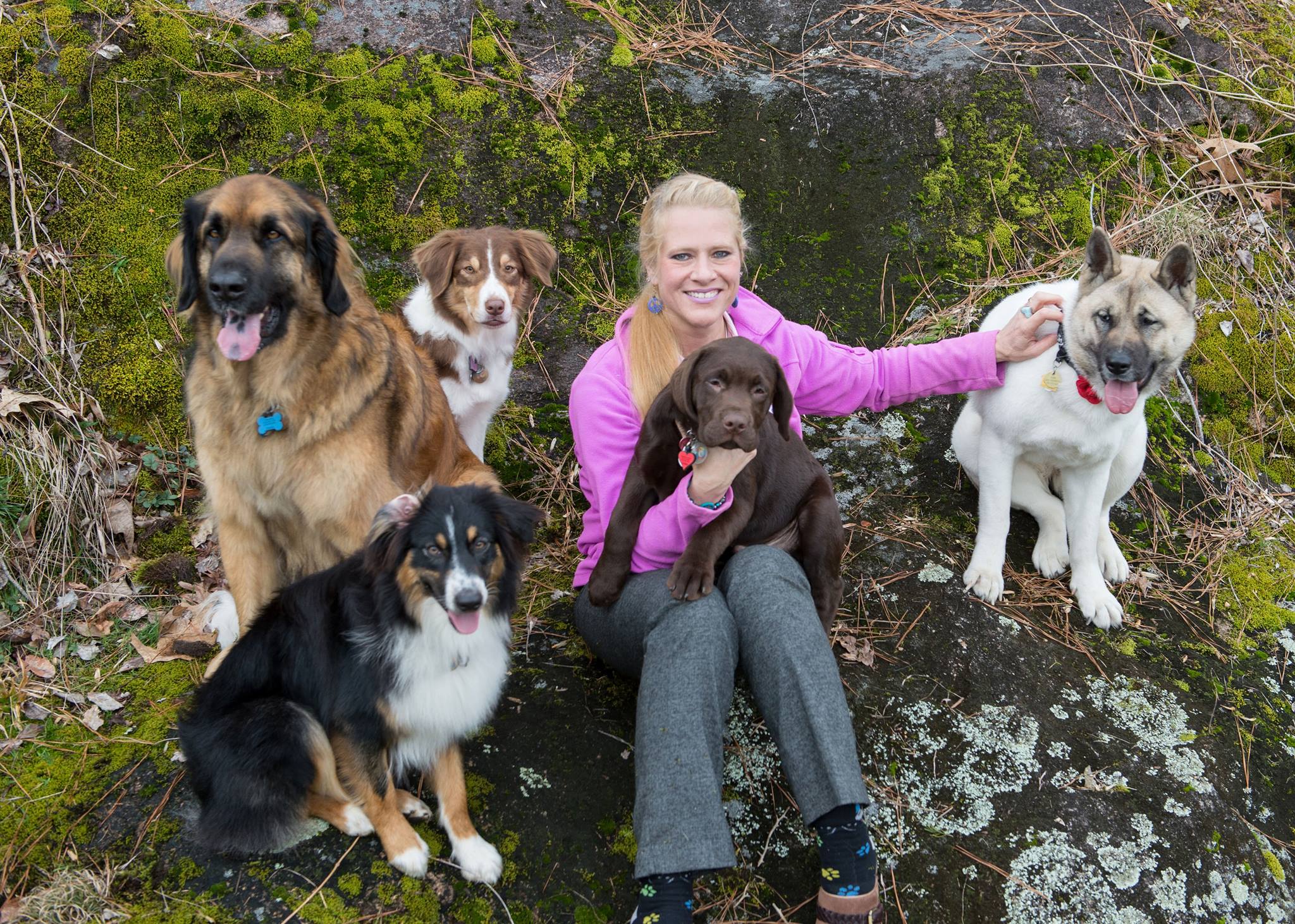
What is a Behaviorist?
A Dog Behaviorist is…
“An individual who evaluates and intervenes with unwanted behavior of the dog on behalf of the dog and his human family.”
Many dog owners find that their dogs regularly display behaviors that are disruptive, unpleasant, or in some cases even dangerous to other pets and family members. Local ordinances may also hold dog owners responsible for the behavior of their pet, making it even more crucial that negative behaviors be identified and addressed promptly. While it is a good idea for pet owners to take up concerns about pet behavior with their veterinarian, as some behaviors may be caused by medical issues, not all veterinarians have the training or expertise to help manage and change a pet’s behaviors. Veterinarians and behaviorists work closely together. In fact, it’s important to consult your veterinarian whenever your dog shows changes in behavior. For example, if your dog begins to growl when touched or stops responding to cues like “sit,” medical conditions such as arthritis or hearing loss could be at the root of the problem. Any underlying health issue that causes pain can also lead to behavior and personality changes. If your vet rules out an underlying medical condition, then you might want to discuss consulting an animal behaviorist. A dog behaviorist can work with a pet owner and help him understand why his pet is misbehaving and what the owner can do to address the problem.
Experts in dog behavior may work in a variety of settings, although many experts believe that it is best for a dog behaviorist to work with dogs in their own homes so that the behaviorist can observe the context in which the dog lives and identify any issues that may be triggering negative behaviors. The dog may also be more comfortable in his own home, making it easier for the dog behaviorist to distinguish between ongoing behavior problems and normal discomfort with being in a new environment. After spending time with the dog and the dog’s owner, the dog behaviorist can develop a plan of action that can assist the dog owner in living in harmony with his dog. In addition to expertise in dog behavior and training, a dog behaviorist must typically have strong counseling and educational skills for working with human owners. In some cases, a dog owner may be contributing to his dog’s behavior issues, and a good behaviorist will need to tactfully address these behaviors while supporting the owner in making needed changes.